User Story: Transport & Logistics · Heavy-Duty Transport
Efficient
Charge Management
in Heavy-Duty Transport
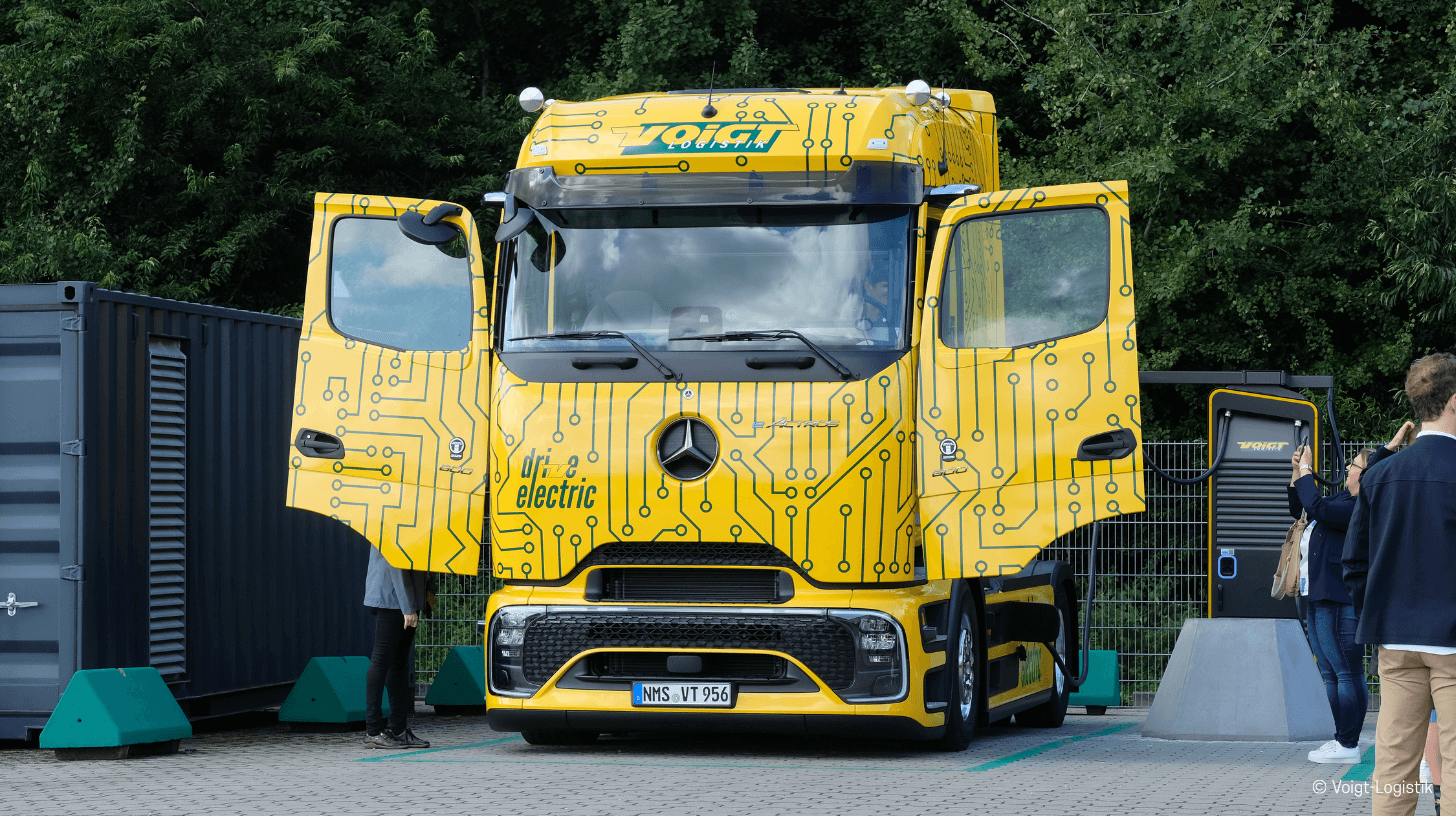
Voigt-Logistik is electrifying its heavy-duty transport at the Neumünster site. To keep the growing electric truck fleet charging economically, easily on the grid and reliably ready for the road, the charging platform elephi from IO-Dynamics connects charging infrastructure and vehicles into a single system there and controls charging proactively.
© Voigt-Logistik
| Challenge | With elephi |
|---|---|
| Electricity prices, charging windows and vehicle availability all have to line up in day-to-day operations | elephi controls charging proactively, based on departure times and states of charge |
| Heavy electric trucks need a lot of power, and the grid connection is limited | Dynamic load management distributes the available power and prevents expensive peak loads |
| Alongside its own fleet, third-party vehicles also charge on site | elephi recognises third-party vehicles and charges them reliably alongside the company's own electric trucks |
Starting point
Bringing power, charging windows and routes together in daily operations
Voigt-Logistik is the largest logistics company in Schleswig-Holstein. Founded in 1933, the company operates more than 400,000 square metres of warehouse and logistics space in Neumünster, along with a fleet of over 100 trucks. Since autumn 2025, the haulier has been steadily electrifying its heavy-duty transport: from the first Mercedes eActros on trunk routes to seven battery-electric trucks today, all charged at its own depot. By 2027, the fleet is set to grow to 25 electric vehicles.
The reasoning behind this is economic: greater predictability, calculable operating costs and independence from volatile diesel prices. Charging mostly happens during the standstill periods between shift changes, using electricity from the offshore wind farms off the north German coast. Two charging stations of 400 kW each supply the vehicles, currently via a grid connection of one megavolt-ampere. In parallel, Voigt-Logistik is expanding its own energy generation: approval is already in place to extend the photovoltaic system to four megawatt-peak, together with a battery storage system.
The larger the electric fleet becomes, the more energy supply turns into a strategic bottleneck. Electricity prices, charging windows, vehicle availability, the grid connection and growing on-site generation all have to work together in daily operations, without putting unnecessary strain on the grid. This is exactly where elephi from IO-Dynamics comes in.
Facts & figures
Charging points
4 AC · 6 DC, 2 of them public
Electric trucks
4 Mercedes eActros 600, 3 DAF 350e
DC fast charging
three charging stations, two charging points each
Expansion target
fully electric trucks by 2027
Project timeline
From first meeting to live operation
January 2025
First contact
Voigt-Logistik and IO-Dynamics first met at the Logistics Innovation Pitch Night 2025. An initial conversation about electrifying heavy-duty transport quickly turned into a concrete joint project.
April 2025
Site analysis results
IO-Dynamics analysed the existing grid and energy infrastructure on site, assessed the electrification potential and determined the charging infrastructure required, along with the potential for optimisation and cost savings. This set the basis for all further planning.
September 2025
Charging park opened, elephi live
Without any public funding, two charging stations of 400 kW each went into operation at the company's own depot. Vehicles and charging points were connected to elephi. From autumn 2025, Voigt-Logistik put its first Mercedes eActros into service on trunk routes.
Live operation
Proactively controlled charging
elephi controls charging proactively every day, prioritises the vehicles by departure time and prevents peak loads. At the public charging points, third-party vehicles are recognised and reliably charged alongside.
Outlook
Further fleet expansion
By 2027, the fleet will grow to 25 fully electric trucks. With the stronger grid connection now applied for, the approved PV expansion to four megawatt-peak and a battery storage system, the site is developing into an energy system in which elephi brings charging, on-site generation and grid supply together.
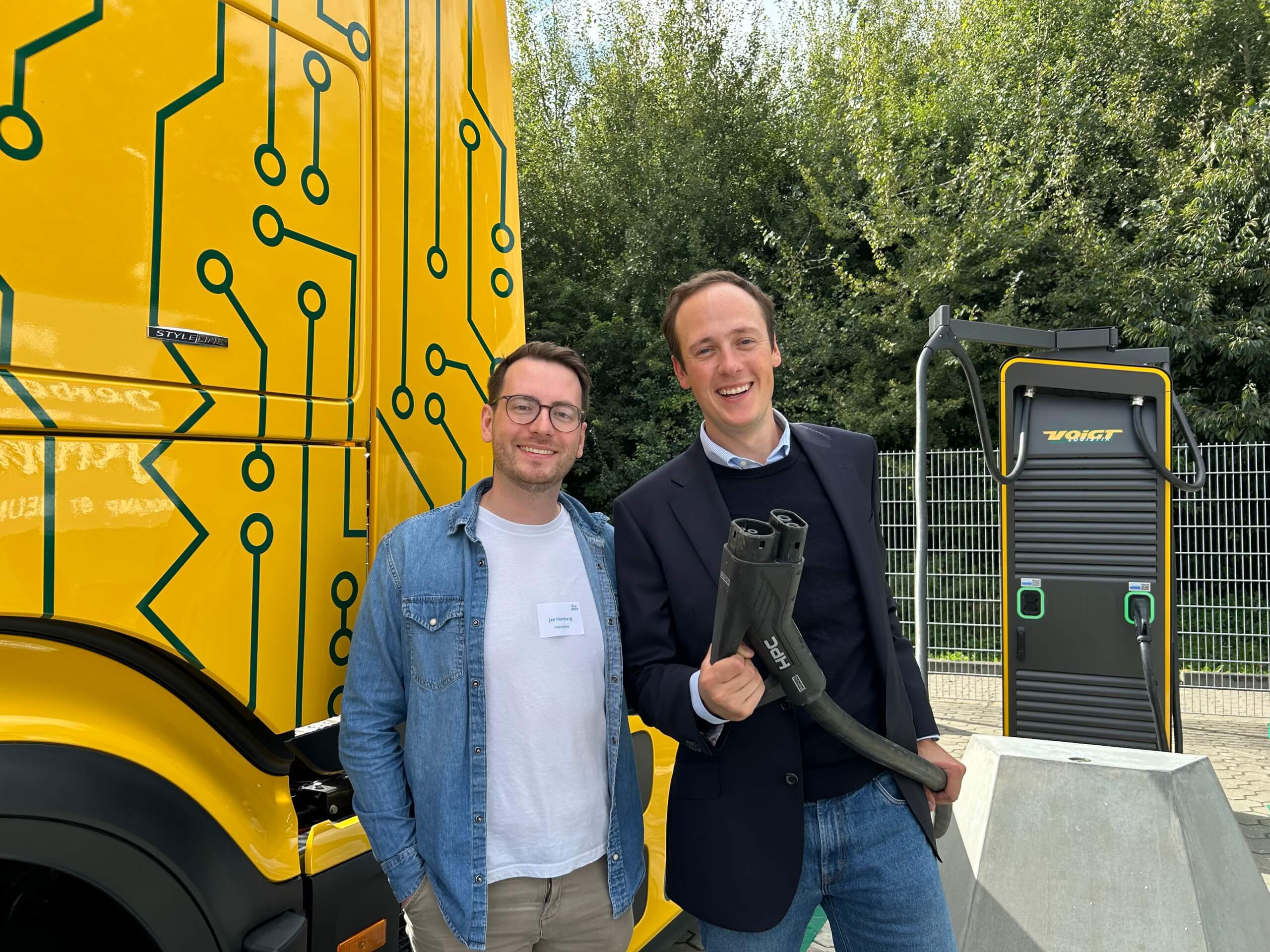
Opening of the Voigt-Logistik charging park in September 2025
© Voigt-Logistik
In the end, what counts for us is the bottom line. When energy supply and transport operations work together cleanly, running electric trucks becomes predictable. That is exactly where elephi supports us in day-to-day operations.
elephi in action
What elephi delivers at Voigt-Logistik every day

elephi factors departure times and states of charge into the charging plan and prioritises the vehicles automatically. Every electric truck is ready at its scheduled departure time with the range it needs.

Every day at Voigt-Logistik, several electric trucks charge at the same time on a limited grid connection. elephi keeps an eye on the total load in real time and continuously distributes the available power across the charging points. This lets the same connection carry a growing fleet, from the seventh truck to the twenty-fifth.

Not every vehicle draws the full power it has been allocated. When elephi detects that a vehicle is already full or only charging minimally, it safely releases the reserved power to the remaining vehicles. That way no capacity goes unused, especially in mixed fleets with different vehicle models.
At the publicly accessible charging points, vehicles from external logistics operators charge too. elephi recognises these vehicles, assigns them to the right user group and always prioritises the company's own fleet. Every charging session is documented cleanly and can be billed per user.
Results
What has changed in operations
Reliability & readiness
The electric trucks are reliably ready each morning with the range they need
Cost efficiency
Reduced peak loads lower grid fees, and charging costs stay predictable
Grid stability
The grid connection is not overloaded, and a costly grid upgrade is avoided
New revenue stream
Spare charging capacity is marketed to partner businesses, creating a second business model
At the Neumünster site, elephi connects charging infrastructure and vehicles into a single system and controls charging proactively. Dispatch plans the vehicle deployment, and elephi takes care of prioritising and controlling charging, without anyone having to step in day to day. The third-party vehicles at the public charging points are reliably charged alongside as well.
With powerful charging infrastructure, a clear roadmap to 25 electric trucks by 2027 and a growing on-site energy system, Voigt-Logistik shows how the transformation in heavy-duty transport works in practice. At the same time, spare charging capacity is marketed to partner businesses. The basis for steady expansion in the years ahead is in place.


