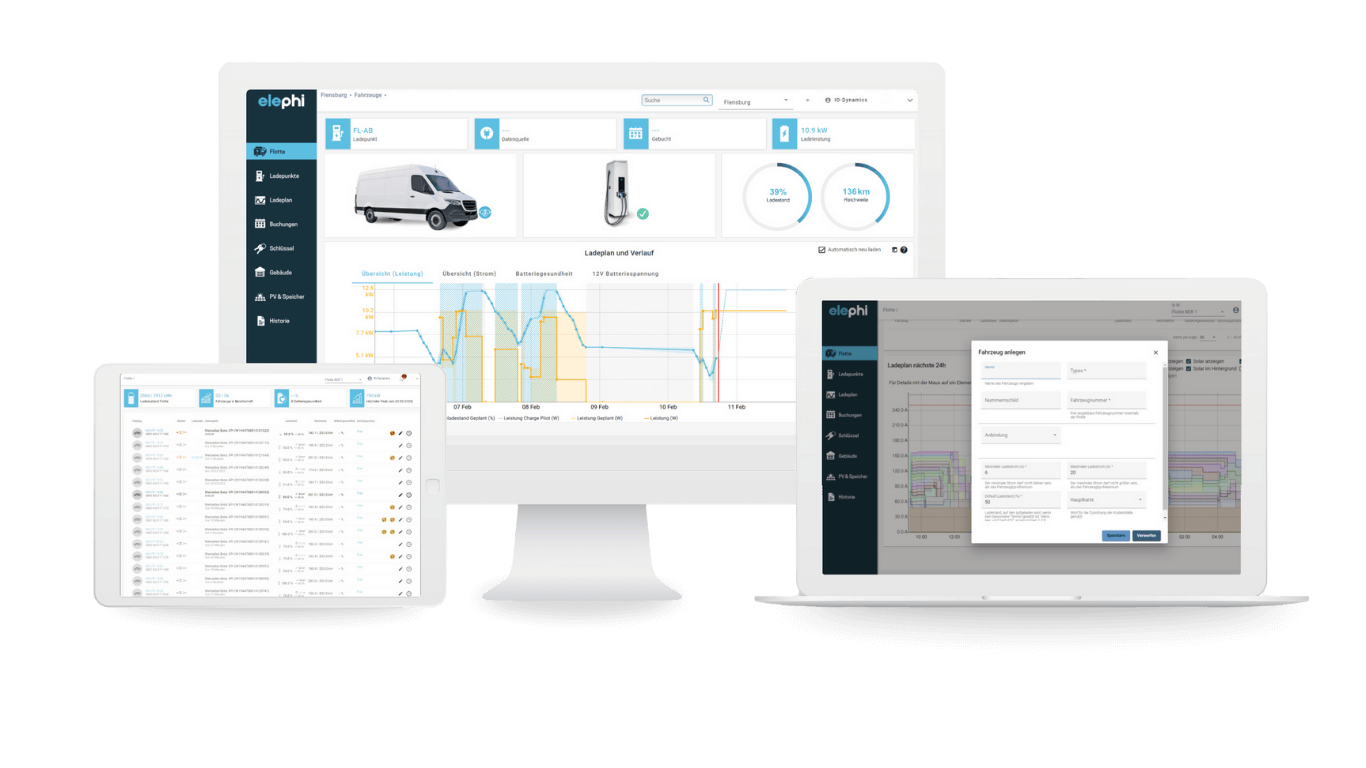







EVs that are ready to go. Power costs that go down.

elephi takes the hassle out of charging: No more poor planning, no downtime, no unnecessary energy costs. The platform thinks ahead, automates your operations – and ensures every vehicle is ready when needed.

Customers who rely on elephi
Ewe logo Addicks & Kreye
flaschenpost logo
Ewe logo
Bäko SH Logo
GLS Logo
Customers who rely on elephi
Voigt Logistik
Alois Müller Logo
Tier
Diez Spedition  Logo
Unitax Pharma Solutions Logo
Customers who rely on elephi
Logo Team Sauberes Karlsruhe
roll
Wasgau C+C Logo
Bäko Südwest Logo
Logo Jacob Cement

elephi thinks, controls and saves

Conventional charging management

X No insights into charge levels and electricity costs

X Charging points often blocked or poorly utilised

X Energy drawn during expensive peak times

X No use of available solar power

X Manual planning wastes time and nerves

X No interfaces to TMS, booking or billing systems

Charging your e-fleet with elephi

Full control: Real-time overview of all charging points and vehicles

Ready when it matters: Charging processes align with actual demand and routes

✓ Lower power costs you’ll feel: Smart use of off-peak tariffs and PV power

  No more planning hassle: Charging runs automatically and reliably in the background

  Seamless integration, no data silos: elephi connects with TMS, billing and energy management systems

Discover all features

"

"With elephi, we reduced investment costs by 60% without spending a single euro on additional grid capacity. Today, over 500 charging points are reliably supplied."

"

Stephan Zech  I  Head of Fleet Management, die flaschenpost, 3,500 vehicles
Read the full story

elephi doesn't just follow along, it thinks ahead

01

elephi knows which vehicle needs to charge and when
By capturing vehicle data, usage times and battery levels, elephi creates a clear picture of charging needs.

02

elephi identifies the ideal charging time
All influencing factors like routes, energy prices, grid load and PV generation flow into the analysis to enable optimal charging decisions.

03

elephi creates a charging plan that adapts automatically
Vehicles are scheduled efficiently based on usage relevance, energy availability and grid capacity.

04

elephi charges vehicles based on need and priority
Vehicles that need to be ready earlier are charged first without conflicts at the charging station and no manual intervention.

05

elephi uses energy at the right time
Charging is automatically aligned with low-cost tariffs or available PV power to reduce costs and ease grid load.

06

elephi ensures every vehicle is ready to go

Vehicles are charged and ready when needed. elephi makes sure everything runs reliably. Every day.

elephi finally brings vehicles, energy and infrastructure together

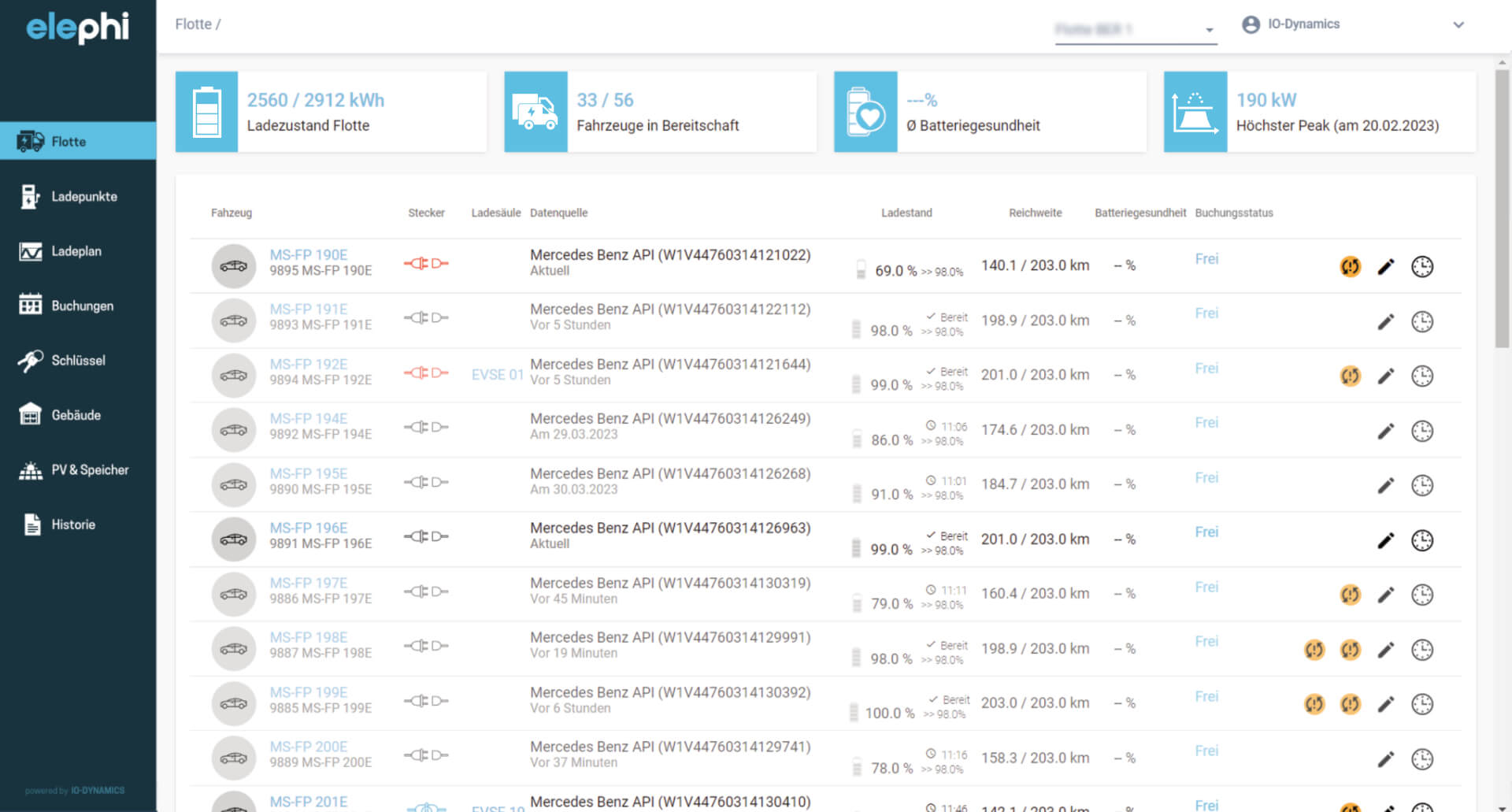
Fleet overwiev

See what matters, when it matters

elephi shows you which vehicles are ready to go – with live insights on battery level, range, and status. For fleets that move, not stand still.

Curious? See elephi in action:

Book your demo

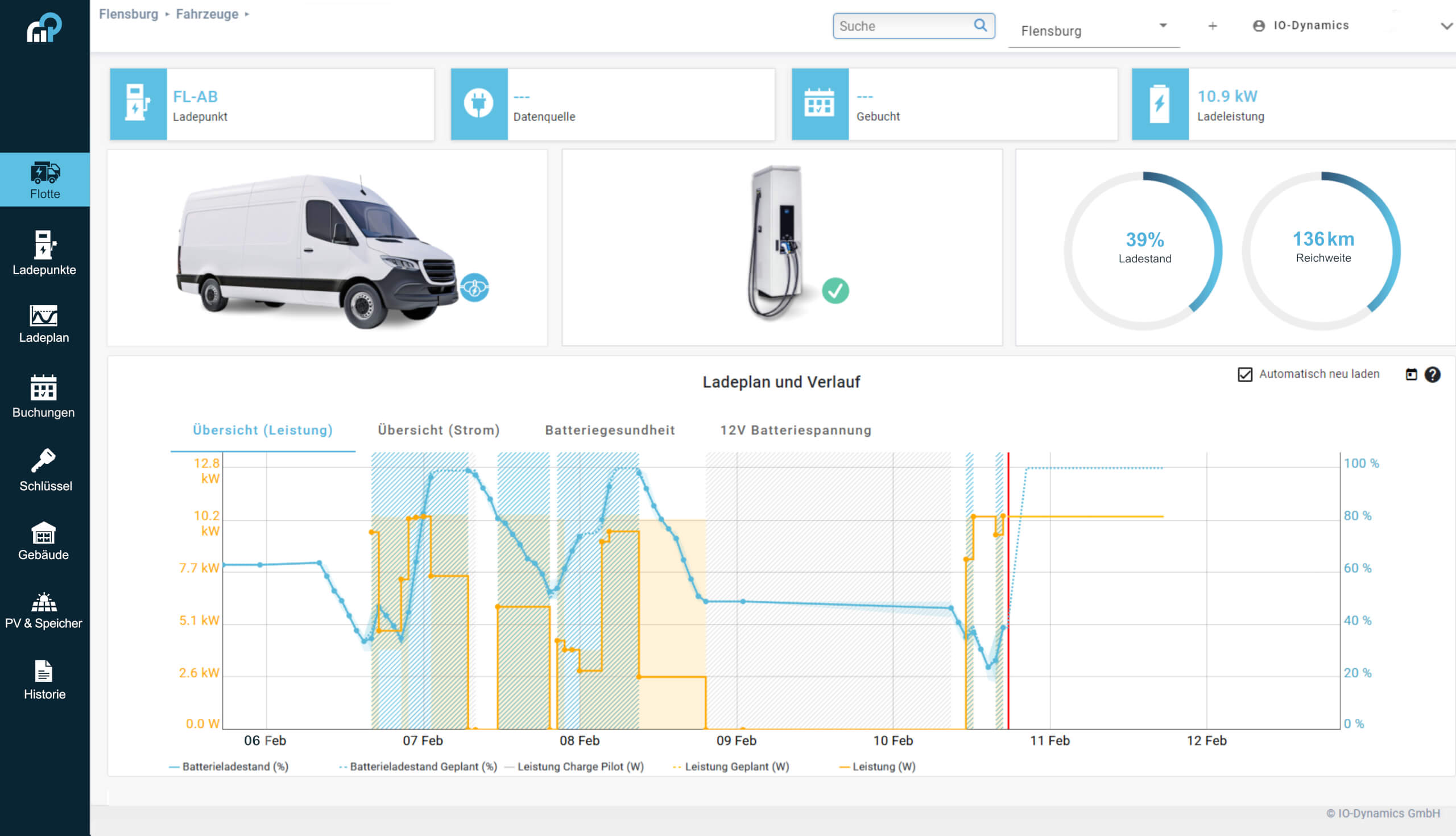
Vehicle view

Every vehicle, in full detail.

elephi gives you all the insights at a glance: charging history, location, operational status. That’s efficient control and full transparency made simple. 

Curious? See elephi in action:

Book your demo

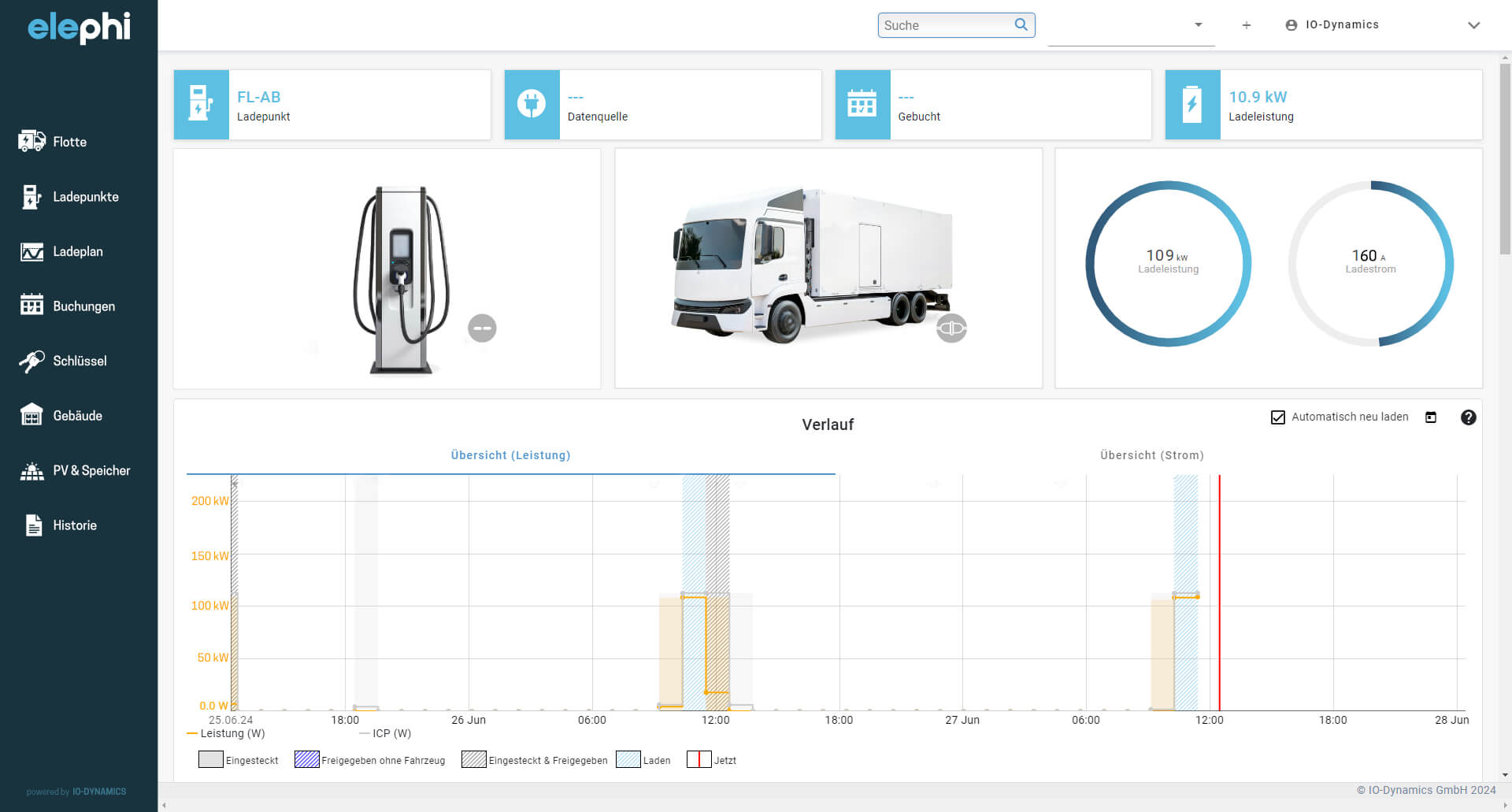
Charging points

Full control of your charging infrastructure

elephi instantly shows whether charging points are available, occupied or malfunctioning – and lets you manage them directly.

Curious? See elephi in action:

Book your demo

Charging point overview

Technology under control

elephi provides precise performance data down to connector level – ideal for remote maintenance, utilisation analysis and error-free charging.

Curious now? See elephi in action:

Book your demo

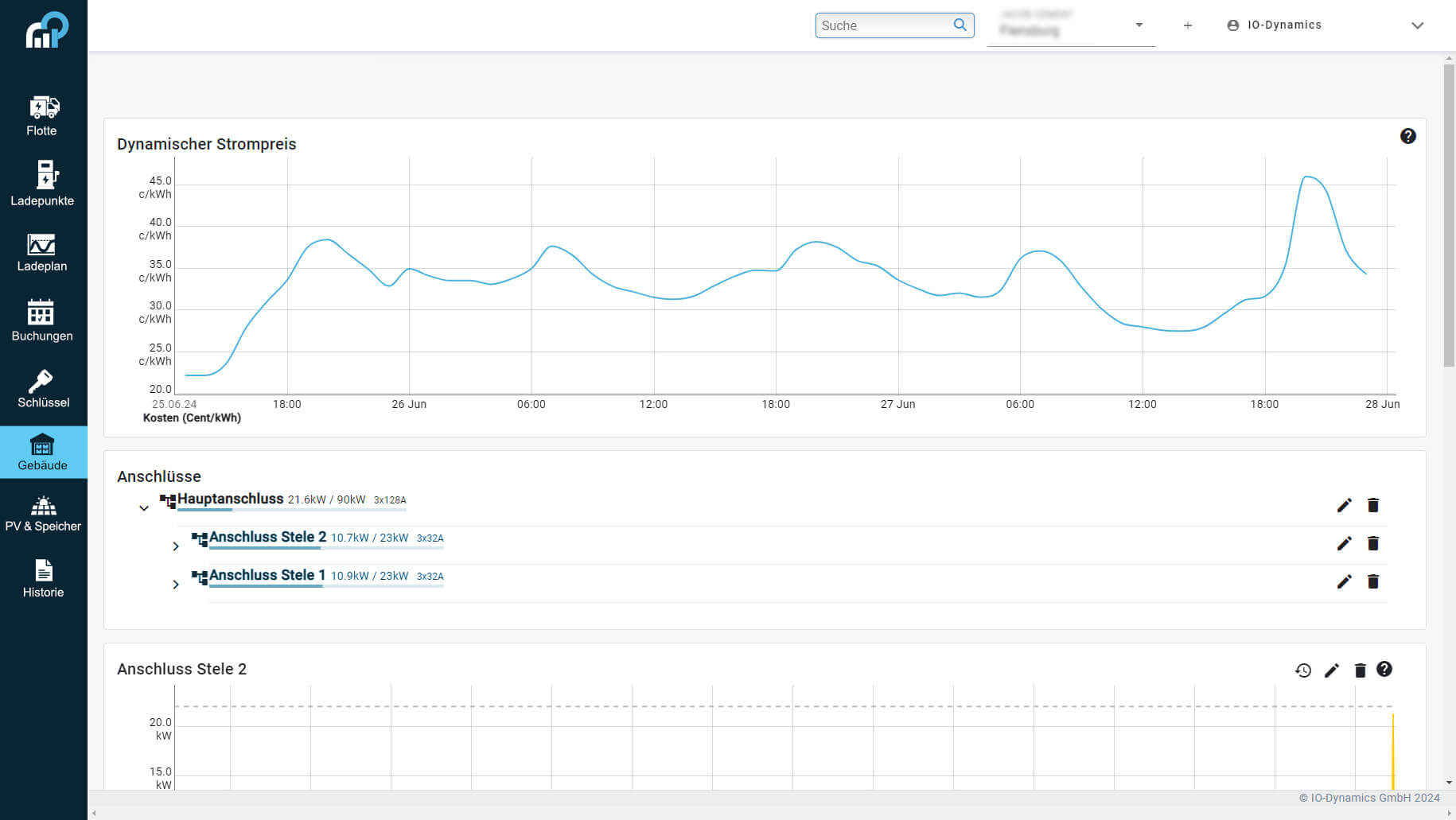
Building overview

No grid connection at the limit

elephi visualises all energy flows – so grid connection, charging processes and building loads work together seamlessly.

Curious now? See elephi in action:

Book your demo

Charging schedule

No more charging chaos

elephi creates intelligent schedules by combining tours, grid load, PV and energy tariffs – ensuring timely deployments and lower costs.

Curious now? See elephi in action:

Book your demo

History

Nothing gets lost

elephi logs all charging sessions in detail – filterable and exportable for internal records, billing and reporting.

Curious now? See elephi in action:

Book your demo

Open to any system.

Ready for any fleet.

elephi integrates seamlessly into existing systems and scales with your operations – from a single depot to a complex multi-site fleet.

Whether it’s route planning, energy optimisation or grid-friendly charging: elephi adapts dynamically, grows with your needs and keeps your operation future-ready.

Everything you need to know about smart charging

What do I need a charging management system for?

Driving range and vehicle availability are critical success factors in electric mobility. Operating an electric fleet efficiently requires a centralised charging management system that connects vehicles, charging stations and energy infrastructure.

As more electric vehicles (EVs) are deployed at a single depot, grid capacity quickly becomes a limiting factor. A smart charging and fleet management system helps businesses manage limited electrical power, avoid peak loads and ensure reliable vehicle readiness.

With intelligent charging control, companies can operate multiple EVs at one location cost-efficiently, grid-friendly and without infrastructure overload.

Read more here

What does intelligent charging (smart charging) mean?

Smart charging, also known as intelligent EV charging, is a technology that automatically controls when and how electric vehicles are charged.

It connects EVs, charging stations, energy providers and users through intelligent software. Charging processes are dynamically adjusted based on factors such as:

  • Grid capacity
  • Energy prices
  • Vehicle availability
  • Charging priorities

This makes EV charging more efficient, cost-effective and grid-friendly. Smart charging is a key technology for scaling electric fleets and supporting the transition to a low-carbon, emission-free transport system.

Read more here

What does load management mean?

Load management (also called EV load balancing) ensures that available electrical power is distributed efficiently across multiple charging points.

Instead of charging all vehicles at full power at the same time, load management systems allocate electricity based on real-time demand and grid limits. Electric vehicles are charged when sufficient grid capacity is available.

Benefits of load management include:

  • Reduced infrastructure and upgrade costs
  • Prevention of peak load penalties
  • Increased availability of charging points
  • Stable and grid-compliant fleet charging

Load management is essential for operating large EV fleets in depots, logistics hubs and commercial sites.

Read more here

What is OpenADR?

OpenADR (Open Automated Demand Response) is an open, standardised communication protocol used to manage and stabilise electricity grids.

It enables automated communication between utilities, grid operators and energy consumers. Through OpenADR, energy demand can be adjusted in real time, helping to balance supply and demand in smart grids.

For electric vehicle charging, OpenADR allows charging systems to:

  • Reduce power consumption during grid congestion
  • Shift charging to off-peak times
  • Support grid stability and renewable energy integration

OpenADR plays an important role in building a flexible, resilient and low-carbon energy system.

What is an RFID charging card?

An RFID charging card is used to identify and authenticate drivers at a charging station. RFID stands for Radio Frequency Identification.

By holding the RFID card in front of the charging point, users unlock the charger and start an electric vehicle (EV) charging session. The card links the charging process to a specific user, vehicle or fleet account, enabling:

  • Secure access to charging stations
  • User-based billing and reporting
  • Controlled use of private or depot charging infrastructure

RFID cards are widely used in public charging networks and commercial EV fleet depots where access management and usage tracking are essential.

What is Plug & Charge?

Plug & Charge is an advanced EV charging technology that enables automatic authentication between the electric vehicle and the charging station.

Instead of using an RFID card or mobile app, the vehicle identifies itself directly when plugged in. The charging session starts automatically, and billing is handled in the background through a secure digital certificate.

Benefits of Plug & Charge include:

  • Faster and more convenient charging
  • No need for RFID cards or apps
  • Secure, encrypted communication
  • Seamless user experience for drivers

Plug & Charge is based on the ISO 15118 standard and is considered a key technology for the future of smart and user-friendly EV charging.

What is bidirectional charging?

Bidirectional charging means that electricity can flow in two directions between an electric vehicle and the power system.

A vehicle with bidirectional charging capability can not only draw power from the grid to charge its battery but also feed stored energy back to external devices or the electricity grid.

This enables new use cases such as:

  • Powering buildings or equipment from an EV
  • Storing renewable energy in vehicle batteries
  • Providing backup power during outages

Bidirectional charging helps make electric vehicles an active part of the energy system and supports a more flexible, renewable and low-carbon power grid.

What does vehicle-to-grid (V2G) mean?

Vehicle-to-Grid (V2G) is a specific form of bidirectional charging where electric vehicles send electricity back into the public power grid.

With V2G technology, energy stored in EV batteries can be supplied to the grid during times of high demand or limited generation. When the grid is under stress, V2G can help balance supply and demand and improve grid stability.

Key benefits of V2G include:

  • Reducing peak loads on the electricity grid
  • Supporting the integration of renewable energy
  • Creating new revenue opportunities for EV fleet operators
  • Contributing to a more resilient and emission-free energy system

V2G turns electric vehicles into mobile energy storage units, playing an important role in the transition to a smart, decarbonised energy future.

language germanlanguage english