TCO of electric trucks: when is the switch worthwhile?
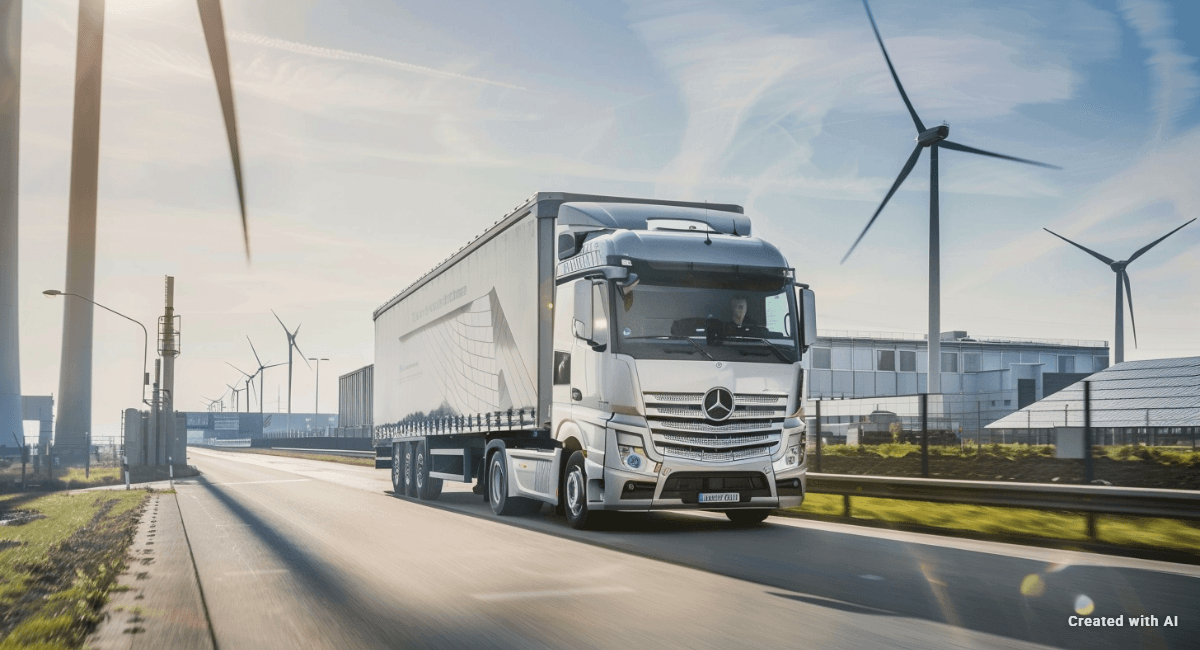
The electrification of transport and logistics fleets is a key step towards more sustainable mobility. But for many companies, the question is: when is it actually worth investing in electric trucks and vans? A detailed look at the total cost of ownership (TCO) provides answers.
The TCO includes all costs incurred over the entire service life of a vehicle. This includes not only the purchase costs, but also operating costs such as maintenance, energy consumption and government subsidies.
A study by the ICCT shows that e-trucks are not only more sustainable in the long term, but can also be financially competitive or even more cost-effective. The study compares the TCO of diesel and electric trucks and shows that the higher acquisition costs of electric trucks are amortized through lower operating costs — usually within 4 to 6 years. Lower energy costs and lower maintenance costs are crucial for this. Especially in urban areas with stop-and-go traffic, e-trucks benefit from their lower energy consumption and lower maintenance requirements.
Overall, the study shows that the switch to electric trucks is not only environmentally friendly, but also makes economic sense:

Let us now look at the individual cost factors in detail.
Electric vehicles are often more expensive to purchase than comparable diesel models. The higher investment costs pose a particular challenge for companies that want to convert their fleet to sustainable drivetrains.
To facilitate the market launch and operation of electric commercial vehicles, there are various funding opportunities in Germany. However, government support is subject to constant change. There is currently no uniform federal funding for electric trucks, but some federal states offer targeted programmes that create financial incentives. These include direct subsidies, tax relief or discounted financing models.
As the funding landscape is developing dynamically, companies should regularly check which subsidies and tax benefits are currently available. In addition to government support, alternative financing models can also help to reduce investment costs. Leasing or pay-per-use models offer companies the opportunity to use electric trucks without high initial investments whilst reacting flexibly to operational requirements.
Careful planning and the use of suitable funding and financing offers can make the switch to electric commercial vehicles more economically attractive and profitable in the long term.
The cost of electricity per kilometre is generally lower than the cost of diesel, which can lead to considerable savings in the long term.
Intelligent energy management is crucial to minimising the operating costs of electric fleets and ensuring an efficient, reliable energy supply. With time-controlled charging strategies, electric trucks can be charged preferentially when electricity tariffs are low or there is an oversupply of renewable energy. This reduces costs and increases the proportion of green energy. Dynamic control also makes it possible to distribute charging power in order to avoid peak loads and reduce the strain on the power grid.
The integration of decentralised energy sources such as photovoltaic systems and battery storage further optimises the energy supply and makes companies less dependent on expensive grid electricity. Intelligent charging strategies are therefore a key component for the economical and sustainable electrification of commercial vehicle fleets.
Maintenance costs play a decisive role in the total cost of ownership of commercial vehicles. Electric vehicles have a clear advantage here, as they have fewer moving parts and are therefore less susceptible to wear and tear. In contrast to diesel vehicles, there is no need for costly maintenance work such as oil changes, clutch replacements or the replacement of exhaust systems and injection systems.
Another important factor is recuperation — energy recovery during braking — which significantly reduces mechanical brake wear. This means that brake pads and discs need to be replaced less frequently, which also helps to reduce costs.
Overall, this lower maintenance requirement means that the maintenance costs of electric commercial vehicles can be up to 50% lower than for comparable diesel models.
Battery technology is constantly evolving, leading to a continuous improvement in battery service life. Thanks to intelligent charging and energy management, electric trucks can be charged in a targeted manner that protects the battery. At the same time, charging cycles can be monitored precisely so that signs of wear or potential failure are detected early and appropriate action can be taken.
In this way, the residual value of batteries can increase, especially if they continue to be used after their first life in so-called "second-life" applications. Some manufacturers have also introduced battery leasing models to reduce the financial burden and counteract residual value risks. These models make it possible to use batteries without buying them outright — a flexible and sustainable solution.
Beyond direct operating costs, a number of government incentives have a significant impact on the TCO of electric trucks and should not be overlooked in any serious calculation.
Toll exemption until 2031: Germany's full exemption from truck tolls for zero-emission vehicles was extended by law until 30 June 2031. For a fully electric 40-tonne truck, this represents a saving of around €0.35 per kilometre compared to a diesel equivalent. At an annual mileage of 100,000 km, that amounts to €35,000 per year from the toll exemption alone.
THG premium: Operators of electric commercial vehicles in Germany are also entitled to a greenhouse gas reduction premium (THG-Prämie). Depending on the vehicle class, this amounts to between €723 and €8,048 per year — a direct financial benefit that should be factored into every TCO calculation.
Vehicle tax: Electric vehicles are exempt from motor vehicle tax for up to ten years, further reducing overall costs.
Rising CO₂ pricing on diesel: On the cost side for diesel, Germany's national carbon pricing mechanism continues to increase the price of diesel fuel year on year. Fleets running on diesel will face rising operating costs as a direct result. Anyone calculating long-term TCO should account for this trajectory.
Electric trucks are already an economically viable solution for urban delivery traffic and for routes with fixed schedules and predictable charging times. In these areas of application, they make the most of their advantages — low operating costs and zero emissions. For regional and medium-distance transport up to around 500 km, e-trucks are increasingly practical: many current models achieve real-world ranges of over 500 km, and charging can be integrated into the legally required 45-minute driver break after 4.5 hours of driving time.
For genuine long-distance use above 800 km, infrastructure is developing rapidly. In October 2025, Germany's first public megawatt charging station (MCS) for battery-electric trucks opened at motorway service area Lipperland Süd on the A2. The federal government plans to build a nationwide truck fast-charging network with around 4,200 charging points at 350 locations along Germany's motorways. MCS chargers can bring a heavy truck from 20% to 80% charge in 30 to 45 minutes — exactly matching the mandatory driver rest period and making long-haul electric operation significantly more practicable.
It is worthwhile for companies to carry out an individual TCO calculation and take intelligent charging management solutions into account in order to achieve the maximum economic advantage.
Are you thinking about switching? Our experts will be happy to advise you on the best strategies for your e-fleet!
Questions about the product?
Send an email to
Technical questions?Send an email to
Support-Tel.:
+49 461 402 142-10


