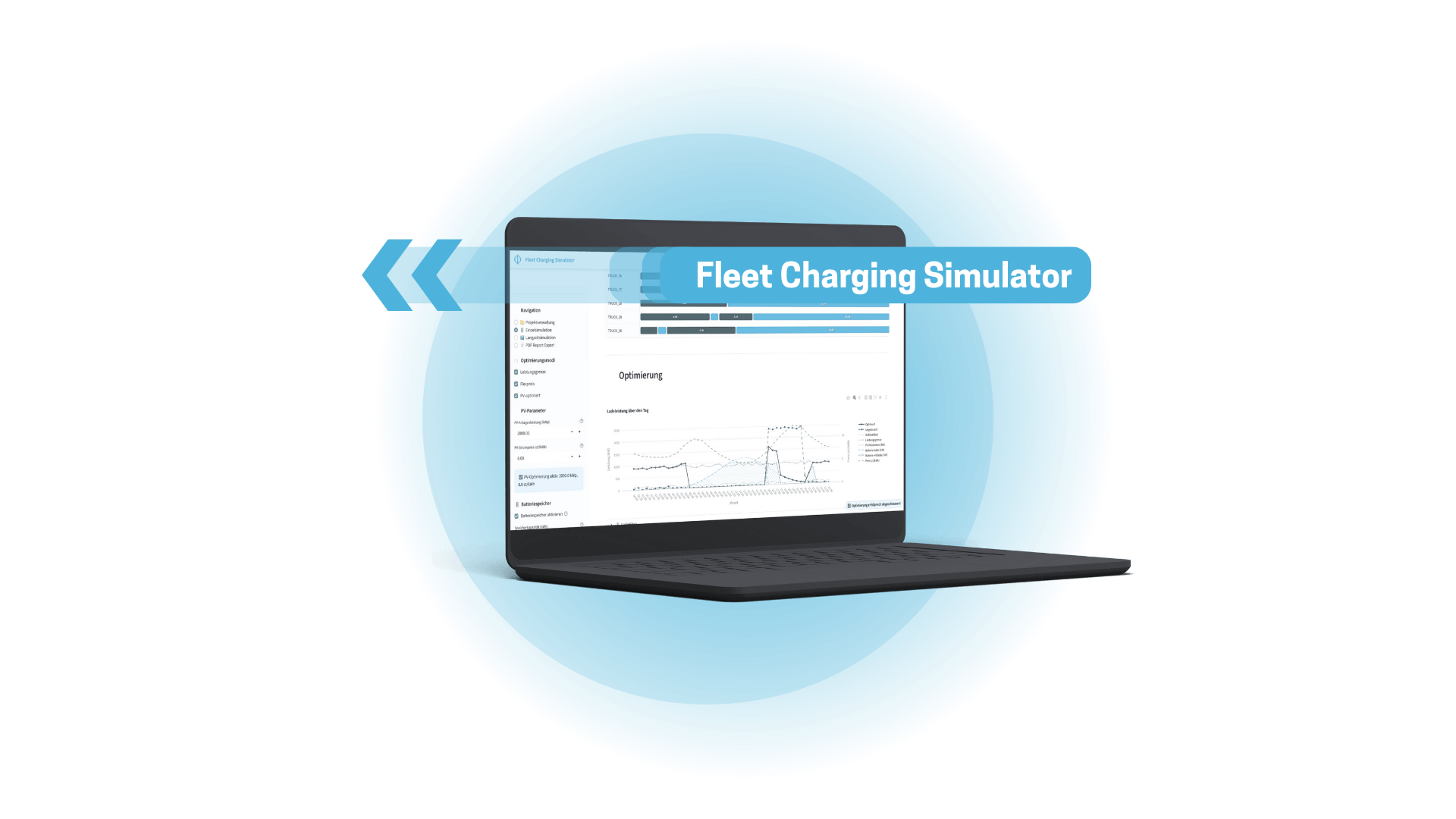
Driven by climate targets, ESG/CSRD requirements and clear economic benefits, more and more businesses are switching their vans, company cars and service vehicles to electric drivetrains. As fleet sizes grow, one topic is moving into focus: electricity costs and charging planning. While fuel prices were the main concern for combustion-engine fleets, the profitability of electric fleets depends heavily on the tariff model, grid charges, peak loads and the ability to control charging processes intelligently.
Dynamic electricity tariffs: flexibility instead of fixed prices
Dynamic electricity tariffs differ from traditional electricity contracts with a fixed unit price because the unit price per kWh changes continuously. It is linked to the short-term electricity market (spot market) and fluctuates throughout the day depending on supply and demand. For businesses, this means electricity does not cost the same at every hour, so the timing of charging becomes a direct cost factor.
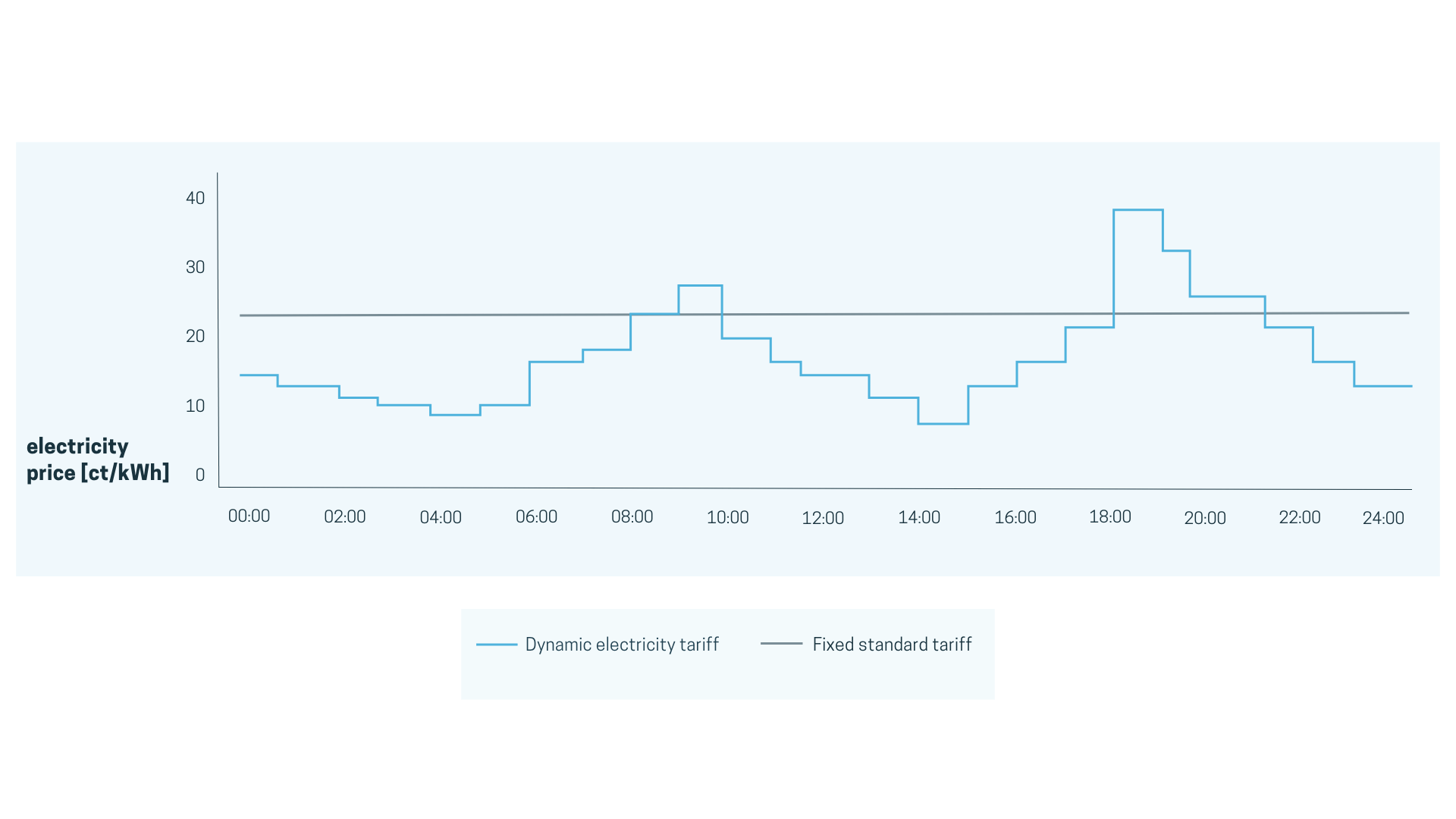
Two terms from the electricity market are particularly important to understand: Day-Ahead and Intraday. Day-Ahead means prices for the following day are fixed in advance. This is especially helpful for planned charging at the depot. Intraday means prices can change at short notice on the same day, i.e. closer to the actual time of consumption. This is relevant when operating times shift unexpectedly or vehicles return unplanned.
The key point is this: a dynamic tariff is not automatically a guarantee of savings. The benefit only arises if consumption can be shifted flexibly into cheaper time windows. This is exactly why dynamic tariffs are especially interesting for electric fleets: depot dwell times often provide the flexibility needed to align charging times with favourable price windows.
To make dynamic tariffs usable in practice, an intelligent metering system (smart meter / iMSys) is also required. It is the technical basis for measuring electricity consumption accurately over time and billing it correctly at variable prices. In addition, electricity suppliers in Germany have been required to offer dynamic electricity tariffs since 2025. Together, these two developments make the topic particularly relevant for businesses operating electric fleets.
Using dynamic electricity tariffs intelligently: How charging management reduces electricity costs for electric fleets in depot operations
A dynamic electricity tariff creates the foundation for cheaper charging times, but it does not automatically lower electricity costs. The real advantage only emerges when electricity consumption can be actively shifted into suitable time windows.
For electric fleets in depot operations, this flexibility is generally available because vehicles are often parked on site for several hours. The crucial factor, however, is that charging planning is done systematically rather than manually. Without control, vehicles often start charging immediately when plugged in, which is not necessarily when electricity is cheapest. This leaves savings potential unused and can also create unnecessary peak loads.
The real lever therefore lies not in the tariff itself, but in using it intelligently. This is where intelligent charging management comes in: it connects charging infrastructure, vehicles and energy systems into one centrally controlled unit. Among other things, it takes into account:
- operating times, routes and dwell times
- SoC (state of charge) of the vehicles
- grid connection capacity and peak shaving
- PV generation and battery storage operation
- dynamic price signals (Day-Ahead/Intraday)
Based on this, the software decides which vehicle charges when and at what power level, with costs, grid stability and availability in mind.
In practice, this means charging windows are not used “by gut feeling”, but optimised on the basis of price profiles, operational planning and grid limits. Charging processes are shifted out of expensive periods (e.g. evening peaks) into cheaper windows (often at night or during periods with strong renewable generation), without dispatch or operations having to intervene manually every day.
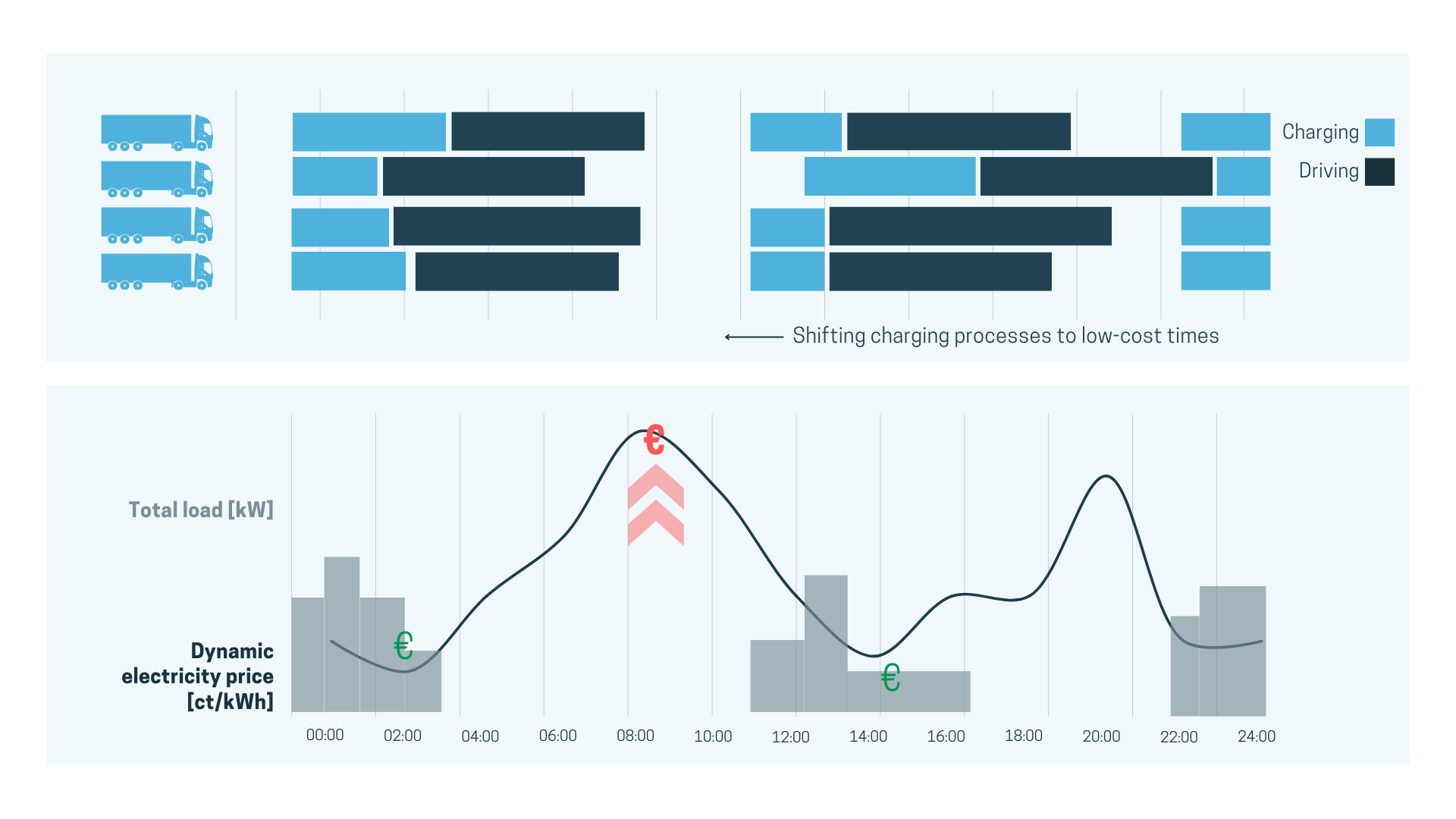
Platforms such as elephi by IO-Dynamics combine timetable data, states of charge, PV forecasts, grid limits and exchange prices, and use this to calculate the optimal charging plan for all vehicles at the depot. This interaction is what turns a volatile tariff model into a predictable cost advantage for electric fleets.
Practical insight: The more flexible the dwell times and the clearer the “latest fully charged by” time for each vehicle, the greater the savings potential.
More than just savings: Additional benefits of smart charging
Companies linking charging to tariffs in a data-driven way gain multiple advantages
1. Lower energy costs
By shifting charging sessions into favourable price windows, electricity costs can be reduced significantly. Practical experience shows that savings of 15–30% are realistic, depending on the level of operational flexibility. This is a scale of reduction that has a noticeable impact on overall operating costs and fleet profitability.
2. Fewer peak loads, better grid use
Intelligent load management distributes charging processes in a way that avoids peak demand. This relieves pressure on the grid connection and can improve the overall cost structure, particularly at high-capacity depot sites where demand charges play a significant role.
3. Improved CO₂ footprint
Charging vehicles during periods of high renewable energy availability reduces the carbon intensity of fleet operations. When combined with on-site solar PV and battery storage, this effect can be amplified further, increasing the share of renewable energy in the charging mix.
4. transparency and planning security
Data-driven charging management provides full visibility over when vehicles are charged, for how long and at what cost. This makes the economic performance of the electric fleet not only measurable, but actively manageable, creating long-term planning certainty for fleet operators.
Practical example: Eight electric trucks, DC fast charging, on-site solar and a dynamic electricity tariff in action
The real economic impact of combining dynamic electricity tariffs with intelligent charging management becomes clear in day-to-day logistics operations.
Initial setup: An electrified depot with on-site energy generation
A regional logistics company operates eight fully electric trucks from its depot. Vehicles are charged via three DC fast chargers with power ratings between 150 kW and 400 kW.
In addition, the site is equipped with a 425 kWp photovoltaic system, covering a significant share of the daily electricity demand. This combination of high charging power and on-site renewable generation reflects a typical setup for larger electric fleets in depot-based operations.
How intelligent charging management and a dynamic tariff work together
The intelligent charging and fleet management system centrally coordinates all charging processes. It takes routes, planned departure times and state of charge (SoC) into account and prioritises vehicles that need to be ready first.
At the same time, on-site solar generation is systematically integrated into the charging strategy. Surplus PV energy from midday production is either used directly for vehicle charging or strategically scheduled to reduce grid consumption later in the day. Peak loads at the grid connection point are actively avoided by dynamically adjusting charging power.
In parallel, a dynamic electricity tariff is applied. The software shifts charging sessions into favourable price windows, for example, during night-time hours with lower wholesale market prices or during periods of high renewable energy availability in the grid.
This creates an integrated energy system in which self-generated power, grid electricity and price signals are intelligently aligned rather than managed separately.
The result: Measurable impact in daily fleet operations
The combined approach delivers clearly quantifiable results:
- Electricity costs reduced by up to 25%
- Annual savings of approximately €45,000
- Improved carbon footprint due to a higher share of renewable energy
- Full operational reliability, with all vehicles ready when required
This example demonstrates that dynamic electricity tariffs only unlock their full potential when combined with intelligent charging management. In depot-based electric fleet operations, they evolve from a pricing model into a strategic tool for reducing energy costs and optimising electric mobility.
Requirements: What businesses need to actually use dynamic tariffs
To leverage these benefits, a few conditions must be met:
- Technical infrastructure: smart meters, controllable charging points and a central platform to process data and automate charging.
- Operational integration: charging windows must be defined, processes aligned, and dispatching included.
- Regulatory compliance: from the German Energy Industry Act (EnWG) and Renewable Energy Act (EEG) to data protection rules.
The good news: as smart meters and intelligent charging platforms become more widespread, the entry barrier keeps falling. It’s becoming easier for companies to benefit from dynamic tariffs and smart charging and to future-proof their fleets.
cost check in 3 Steps: How much potential Is hidden in your depot?
Assessing whether dynamic electricity tariffs can deliver economic benefits in depot operations does not require a full data audit from the outset. An initial review of three key areas is often enough to identify whether meaningful potential exists.
1. Operations & Flexibility: How predictable are your charging windows?
The primary lever lies in the ability to shift charging sessions over time.
A few simple questions can help clarify the situation:
- How long do vehicles typically remain at the depot?
- Are departure times clearly defined for the next shift?
- Are all vehicles equally prioritised, or are some more flexible than others?
The larger the time window between return and the next deployment, the greater the opportunity to shift charging into favourable price periods.
2. Site & Energy Setup: What does the current energy system look like?
For smart charging to deliver measurable results, the technical baseline must be understood:
- What is the available grid connection capacity?
- Where do peak loads currently occur?
- What types of charging infrastructure are in use (AC/DC, power levels)?
- Is there on-site solar PV and/or battery storage that can be integrated into the charging strategy?
Even a high-level overview of these factors can indicate whether energy flows at the depot could be managed more efficiently.
3. Tariff & Control: Is a dynamic electricity tariff suitable for your operation?
Once operations and infrastructure are broadly understood, the tariff model can be assessed:
- Would a day-ahead-based pricing model fit the operational structure?
- Are more flexible adjustments required due to fluctuating return times?
- Is there a software solution in place that automatically aligns price signals, vehicle demand and grid limits?
When these three dimensions show room for optimisation, a key prerequisite is met: the depot offers real potential to reduce energy costs through dynamic electricity tariffs and intelligent charging management.
The next step is to quantify this potential using real operational data.
This is where IO-Dynamics comes in. In a complimentary initial consultation, we assess your depot operation using our Smart Charging Simulator to determine:
- the realistic savings potential at your site,
- where the strongest optimisation levers lie (tariff structure, charging strategy, grid connection, PV, storage),
- and which measures make economic sense in the short, medium and long term.
Rather than generic benchmarks, you receive a tailored evaluation of how charging management, tariff design and your energy system can be effectively aligned, based on your fleet structure, operating schedules and site conditions.
If you would like to understand the concrete potential at your depot, we would be pleased to support you: book a free initial consultation now.